By Dan Larson ·
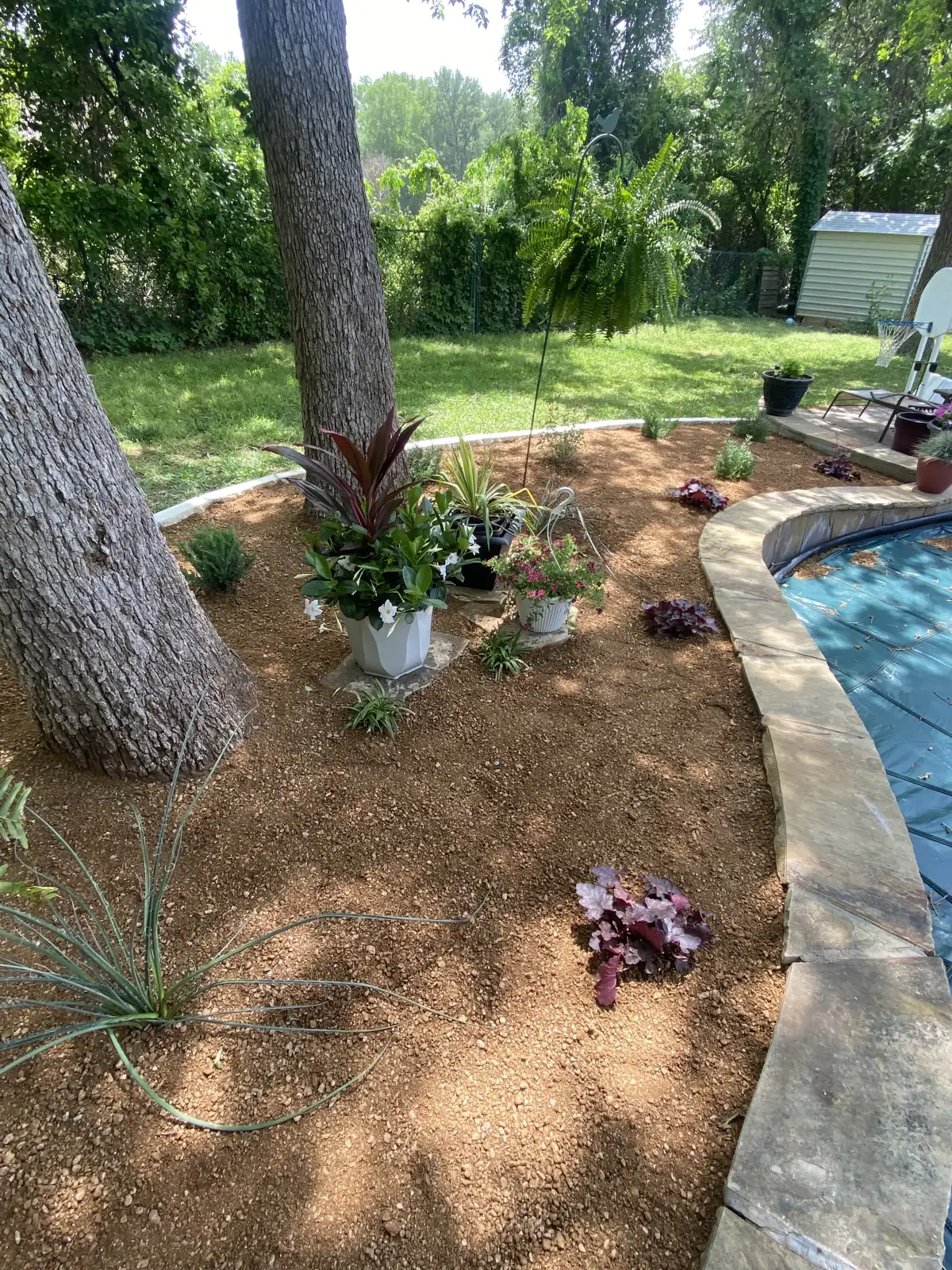
Native plants are the backbone of every landscape we design in Parker County. They evolved over thousands of years to handle exactly the conditions your yard presents: clay soil, intense summer heat, periodic drought, and unpredictable freezes. When you plant natives, you are working with the land instead of against it. The result is a landscape that uses less water, requires less maintenance, supports local pollinators, and looks better over time than imported species that struggle to survive North Texas conditions.
Weatherford sits in USDA Zone 8a, where minimum winter temperatures reach 10 to 15 degrees Fahrenheit. But the real test for plants here is not the cold. It is the combination: clay soil with poor drainage, summer temperatures exceeding 100 degrees for weeks at a time, and the rapid temperature swings where a 70-degree day in February is followed by a hard freeze 48 hours later.
Flowering Perennials
These species provide reliable color season after season without annual replanting. Once established, they require minimal supplemental watering.
Texas Sage (Leucophyllum frutescens)
Texas Sage is arguably the most reliable native flowering shrub for Parker County landscapes. It blooms profusely after summer rains with lavender, pink, or white tubular flowers. It thrives in full sun, tolerates alkaline clay soil, and requires almost no supplemental water once established. Reaches 5 to 8 feet in height and width. Plant it in well-drained locations — it does not tolerate standing water. Texas Sage is excellent as a perimeter planting, privacy screen, or accent specimen in desert scape designs.
Autumn Sage (Salvia greggii)
Autumn Sage is a compact perennial (2 to 3 feet) that blooms from spring through fall in red, pink, coral, or white. It is one of the longest-blooming native plants available and is a magnet for hummingbirds and butterflies. Extremely drought-tolerant once established. Performs best in full sun with well-drained soil. We use Autumn Sage extensively in our custom flower bed installations because it delivers consistent color with minimal care.
Black-Eyed Susan (Rudbeckia hirta)
Bright yellow daisy-like flowers from June through September. Grows 2 to 3 feet tall and self-seeds readily, expanding its presence over time. Tolerates clay soil and heat well. Excellent for meadow-style plantings and naturalized areas on larger Parker County properties. Pair with Purple Coneflower for a classic Texas wildflower combination.
Purple Coneflower (Echinacea purpurea)
Purple-pink flowers from late spring through summer. Reaches 2 to 4 feet tall. Attracts butterflies and provides winter interest with dried seed heads that goldfinches feed on. Tolerates clay soil and moderate drought. One of the most reliable perennials for North Texas flower beds. Plant in groups of three to five for the strongest visual impact.
Flame Acanthus (Anisacanthus quadrifidus var. wrightii)
Produces tubular orange-red flowers from late spring through fall, making it one of the best hummingbird plants in Texas. Grows 3 to 5 feet as a loose, informal shrub. Extremely heat and drought tolerant — it actually blooms more intensely during hot, dry periods. Deciduous in winter. Use it in informal borders, as a background plant in flower beds, or as part of a desert scape installation.
Native Trees
Choosing the right trees for Parker County means selecting species that tolerate clay soil, temperature extremes, and periodic drought without constant intervention.
Live Oak (Quercus virginiana)
The defining shade tree of Texas. Live Oak is evergreen (semi-evergreen in Zone 8a, dropping leaves briefly in spring), spreading up to 40 to 60 feet wide with a broad, dense canopy. Tolerates clay soil, drought, and heat. Grows relatively slowly but lives for centuries. The Texas A&M Forest Service considers it one of the most valuable landscape trees in the state. Important: do not prune oaks from February through June to minimize oak wilt risk.
Cedar Elm (Ulmus crassifolia)
Native to the North Texas Cross Timbers region, Cedar Elm is perfectly adapted to Parker County conditions. It tolerates clay soil, alkaline pH, drought, and heat better than most shade trees. Grows 50 to 70 feet tall with a vase-shaped canopy. Yellow fall color. Provides shade faster than Live Oak, making it an excellent choice when quicker results are needed.
Texas Redbud (Cercis canadensis var. texensis)
A small ornamental tree (15 to 20 feet) that produces stunning pink-purple flowers in early spring before leaves emerge. Native to the limestone hills of central and north Texas. Drought tolerant once established. Excellent as an accent tree near patios, along walkways, or as a specimen in flower bed designs. Provides dappled shade for understory plantings.
Ornamental Grasses
Native grasses add movement, texture, and year-round interest to landscapes. They are among the most maintenance-free plant choices available.
Lindheimer Muhly (Muhlenbergia lindheimeri)
A clumping grass reaching 4 to 5 feet tall with silvery plumes in fall. Native to the limestone regions of Texas and perfectly suited to Parker County. Extremely drought tolerant. Provides graceful movement in wind and architectural structure in winter. Use as a focal point, mass planting, or along pathways.
Gulf Muhly (Muhlenbergia capillaris)
Produces a cloud of pink-purple flower plumes from October through November. Reaches 3 to 4 feet tall. One of the most visually striking ornamental grasses in North Texas when in bloom. Tolerates clay soil and full sun. Excellent in mass plantings for dramatic fall color. Pair with boulders in a desert scape design for year-round visual interest.
Inland Sea Oats (Chasmanthium latifolium)
One of the few ornamental grasses that thrives in shade to part shade. Drooping seed heads resemble flattened oats and provide winter interest. Reaches 3 to 4 feet. Spreads by seed, making it ideal for naturalizing shaded areas under trees. Tolerates clay soil and moisture, making it suitable for rain gardens and drainage-adjacent plantings near drainage installations.
Ground Covers and Low Growers
Frog Fruit (Phyla nodiflora)
A native groundcover that forms a dense mat 2 to 4 inches tall. Tiny white-pink flowers bloom from spring through fall. Tolerates foot traffic, clay soil, and drought. An excellent alternative to traditional turf in areas where mowing is impractical. Supports native butterflies and bees.
Horseherb (Calyptocarpus vialis)
A native groundcover that thrives in shade where turf grass struggles. Produces small yellow flowers year-round. Grows 4 to 8 inches tall. Extremely low maintenance — no mowing, no fertilizing, no supplemental water in established plantings. Ideal for under-tree areas and shaded bed borders.
Working with Clay Soil
Parker County soil is predominantly Windthorst and Nimrod series clay — heavy, alkaline, and slow-draining. Even native plants benefit from proper soil preparation at installation. We amend planting areas with 3 to 4 inches of compost worked into the top 8 inches of soil. This improves drainage, adds organic matter, and creates a more hospitable root zone without replacing the native soil entirely.
Avoid overwatering native plants in clay soil. The most common mistake we see is homeowners watering natives on the same schedule as a traditional lawn. Most established native plants need supplemental water only during extended drought periods (3+ weeks without rain). Overwatering in clay leads to root rot, which kills more native plants than drought ever does.
Designing with Natives
A well-designed native plant landscape is not a wild meadow. It is an intentional composition that uses native species in structured, refined arrangements. We layer plants by height and bloom season, group complementary colors and textures, and integrate natives with hardscape elements like natural stone borders, gravel pathways, and boulder accents to create outdoor spaces that feel both designed and organic.
If you are considering a native plant landscape for your Weatherford property, schedule a free consultation with Dan. We will evaluate your property's specific conditions — sun exposure, soil type, drainage patterns, and existing features — and recommend species that will thrive in your particular landscape for years to come.