By Dan Larson ·
Retaining walls are one of the most requested landscape features in Parker County. The rolling terrain west of Fort Worth, combined with Weatherford's expansive clay soil, creates conditions where retaining walls are not just decorative but structurally necessary. Whether you are managing a sloped backyard, protecting a structure, or creating usable outdoor space on uneven ground, understanding your options before construction begins saves time, money, and frustration.
When You Need a Retaining Wall
A retaining wall becomes necessary when soil erosion threatens structures or usable yard space. In Parker County, the most common triggers include slopes greater than 3:1 (rising 1 foot for every 3 horizontal feet), water runoff channeling toward the home, hillside erosion exposing tree roots or utility lines, and the desire to create level terraces for patios, gardens, or outdoor living areas.
Parker County's clay soil adds urgency to these situations. When clay absorbs water, it expands with significant force. When it dries, it contracts and cracks. This cycle pushes against any structure that is not engineered to handle lateral pressure. A properly built retaining wall accounts for these soil forces with adequate drainage behind the wall and footings that extend below the frost line.
Types of Retaining Walls
Four primary retaining wall types serve Parker County properties. Each has distinct advantages depending on your terrain, budget, and aesthetic goals.
Natural Stone Walls
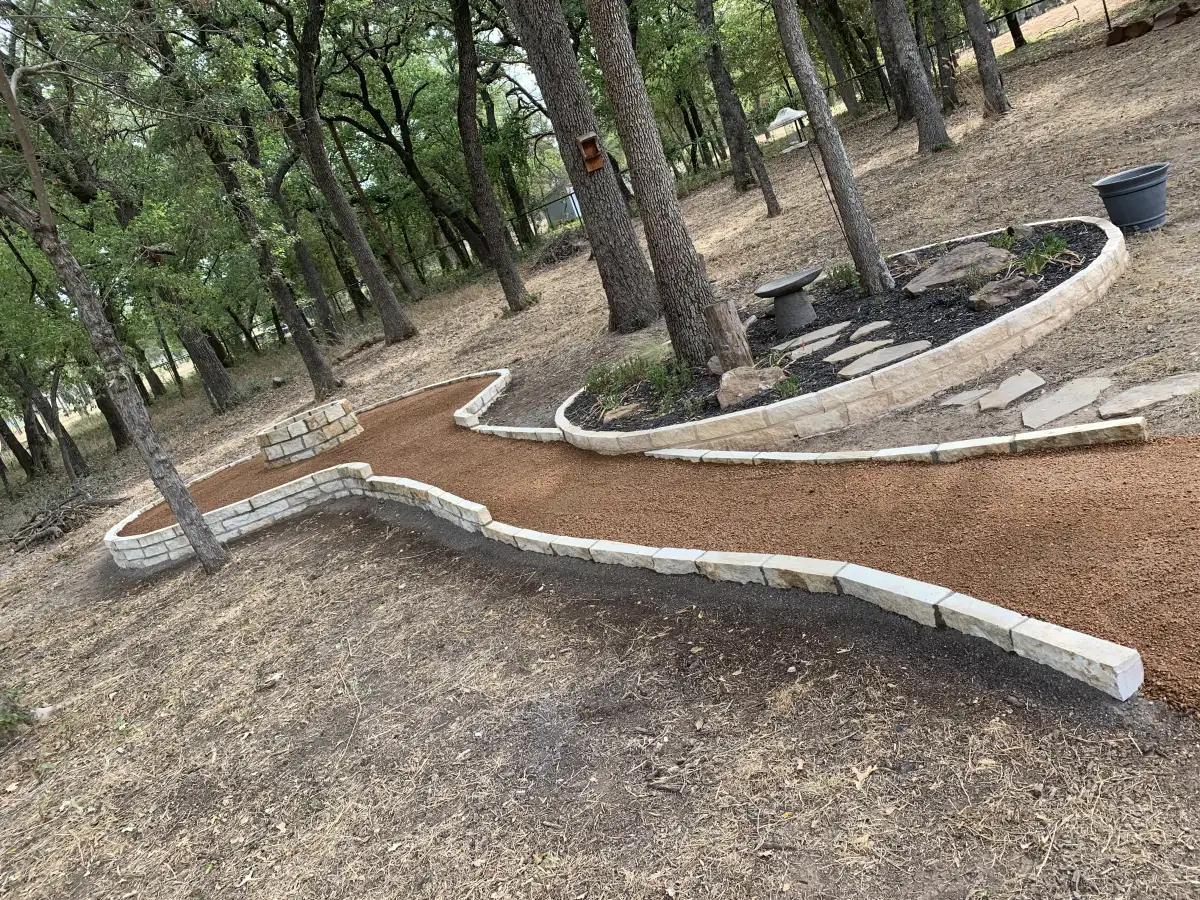
Natural stone is the premium option for retaining walls in North Texas. Limestone and sandstone, both available from local Parker County quarries and suppliers like Big Tex Stone in Weatherford, offer a timeless aesthetic that blends naturally with the landscape. Natural stone walls typically cost $40 to $75 per square foot of wall face, installed. They require no maintenance, will not rot or fade, and last 50 to 100+ years. The tradeoff is higher upfront cost and longer installation time due to the custom fitting required.
Concrete Block (CMU) Walls
Segmental concrete block is the most common retaining wall material in residential construction. Systems like Allan Block, Versa-Lok, and Belgard interlock without mortar, making them efficient to install. Costs range from $20 to $40 per square foot installed. Concrete block comes in various colors and textures to mimic natural stone at a lower price point. Lifespan is 25 to 50 years depending on quality and drainage.
Timber Walls
Treated timber retaining walls are the most affordable option at $15 to $25 per square foot installed. However, they have the shortest lifespan in North Texas conditions: 10 to 15 years before rot, warping, and insect damage require replacement. The intense summer heat and moisture cycles in Parker County accelerate timber degradation. We generally recommend timber only for temporary or low-height applications.
Boulder Walls
Large boulders stacked without mortar create a rustic, natural retaining structure suitable for rural Parker County properties. Costs range from $25 to $55 per square foot depending on boulder size and availability. Boulder walls work well on acreage properties where the natural aesthetic is preferred over a finished look. They require heavy equipment for placement but minimal ongoing maintenance.
Cost Comparison
| Material | Cost per Sq Ft | Lifespan | Maintenance |
|---|---|---|---|
| Natural Stone | $40 — $75 | 50 — 100+ years | None |
| Concrete Block | $20 — $40 | 25 — 50 years | Minimal |
| Boulder | $25 — $55 | 50+ years | None |
| Timber | $15 — $25 | 10 — 15 years | Regular |
For a typical 25-foot-long, 3-foot-high retaining wall (75 square feet of face), total installed costs range from approximately $1,125 for timber to $5,625 for premium natural stone.
Permits in Parker County
Retaining walls under 4 feet in height (measured from the bottom of the footing to the top of the wall) generally do not require a building permit in Texas. Walls exceeding 4 feet typically require both a building permit and stamped engineering drawings from a licensed professional engineer.
Within Weatherford city limits, the City of Weatherford Building Department handles permitting. Properties in unincorporated Parker County fall under county regulations, which are generally less restrictive. If your property is in a subdivision with an HOA, you may need additional design approval regardless of wall height.
Important: even walls under 4 feet must comply with setback requirements. Most jurisdictions require retaining walls to be set back a minimum distance from property lines. We handle all permitting research and submissions for our retaining wall projects, ensuring full compliance before construction begins.
Critical Construction Details
Three elements determine whether a retaining wall lasts decades or fails within years in Parker County conditions.
Drainage. Every retaining wall must have a drainage system behind it. Without drainage, water builds up behind the wall (hydrostatic pressure) and pushes it forward until it fails. We install 4-inch perforated drain pipe embedded in 12 inches of clean gravel behind every wall, with daylight outlets to direct water away from the structure.
Footing depth. In Parker County's expansive clay, footings must extend below the active zone where soil moisture fluctuates. This is typically 18 to 24 inches deep. Shallow footings in clay soil lead to heaving and tilting as the clay expands and contracts seasonally.
Proper backfill. The material behind a retaining wall matters as much as the wall itself. We use clean, compactable gravel rather than native clay backfill. Clay holds moisture, increases lateral pressure, and causes the exact problems the wall is designed to prevent.
Choosing the Right Wall for Your Property
The right retaining wall depends on your specific terrain, the wall's purpose, your aesthetic preferences, and your budget. A wall holding back a hillside on a sloped lot has different engineering requirements than a decorative tiered wall creating garden beds.
We recommend natural stone for any wall that will be a visible design element in your outdoor living space. The upfront cost premium pays for itself in longevity and zero maintenance. For purely functional walls that will be hidden by plantings or on rural properties, concrete block or boulder walls offer strong value.
Every property in Parker County presents unique challenges. Slope angle, soil composition, drainage patterns, and proximity to structures all influence the design. Schedule a free on-site consultation and we will assess your specific situation, recommend the right approach, and provide a detailed estimate.